Sermon by Rev Sydney Maitland for Sunday 1 September 2024.
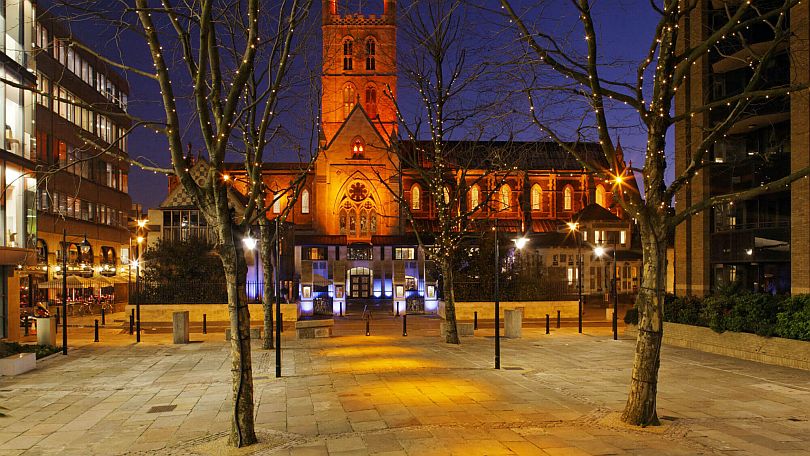
Southwark Cathedral at Christmas (Source)
• First Reading: Song of Songs 2: 8-13 (Admiration and yearning for the beloved)
• Epistle: James 1: 17-27 (Listening and doing)
• Gospel: Mark 7: 1-8, 14-15, 21-23 (That which defiles)
Among my early memories of the church were the Christmas services which we would attend as a family. Living in London, we would cross the city to go to Southwark Cathedral for the midnight communion. The cathedral would be crowded, lit by candles and the choir was exquisite.
There was a form of church-based life, attending weekly services and then home for breakfast. The weekly said communion was dutiful and we would make our escape before anyone could corner my father and ask him to run a youth club or do some other worthy work.
And so it was formal and perhaps rather perfunctory. There might be some atmosphere, but no depth. Words but no communication. Compliance but little or no open faith.
That was how it was. It was only when I was about 18 that I met people saying things like “I know Christ.” I had never seen or heard such stuff before: this was wholly novel. People did not normally talk like that. Maybe a little shocking.
And then we come to our lessons today.
The eager anticipation of young love for the beloved – yearning for the delights of such company. I am told that in Hebrew, this book is really quite racy. That is what I am told.
And then there is the solid counsel of the letter of James.
Faith is personal but practical. It forms a lifestyle: centred on God but is expressed in real life by one’s relations with others.
Slow to speak, slower to anger, but eager to listen. The righteousness – the fairness, unbiased mercy of God, His purity in all things, actions and attitudes, all appetites and impulses, all words uttered and thoughts nurtured. All things revealed and concealed.
There is a new agenda and it comes from God, and is seen in action in the community and the family, at work and with friends and colleagues.
When God is the starting point then our own desires and preferences come to take second place.
It is there in the way we commit ourselves, and the way we use our energies. It is there in our loyalties and friendships – but it is also there in the way we interact with those opposed to us for who we are, what we are or what we believe. Those for whom our reluctance to conform is an insult, even a challenge and a defiance.
These are the ones who will provoke us and abuse or humiliate us. For whom our embarrassment is a matter of enjoyment.
And these are the ones who James knows we encounter daily and before whom forbearance and patience must be front and centre in our lives.
It does not mean that we cannot engage in a certain amount of humour for there is something slightly ridiculous about those whose rejection of God is so fixed that it is a religious observance in its own right and so is open to our own critique and comment.
But then Jesus also sees a more serious side to rejection of the gospel and of who and what He is.
It was those who prided themselves in their own religious purity in their meticulous observance of their traditions who were also the most obnoxious.
The outward show of religiosity and yet the abuse of the simplest and most basic of relationships. The performances of washing and wiping cups and plates, being seen to make generous offerings and receive the obsequious public greetings:
But all the while still harbouring anger, resentment, malice, arrogance and folly, never mind their hidden, maybe covert or secluded adulteries and fornications.
The secret abominations and corruptions, the pride in having the last word and in the endless put-downs and petty humiliations of others.
How could this ever be called godly? How could it ever stand in the place where the most personal and private sins are named in the presence of God and forgiveness asked in sincerity and humility? Where faults are acknowledged and God’s grace – His mercy and wisdom in confronting and rejecting them – are asked for in that place of utter and total reality. Maybe again and again.
What was true then has not changed and we face the same issues. We can never be self-made men and women who worship our creators.
We also may know peace and forgiveness but may never be smug or self-satisfied in it.
We also are still charged with being genuine and wholesome in our relationships and contacts.
If there is a light in us, it is not of our own kindling, and if there is a truth in us it is not of our own contrivance.
What matters is that Jesus should increase in us and that our self-importance should decrease. That is how we will find ourselves – and that is also how the Lord wishes to be found in us.
