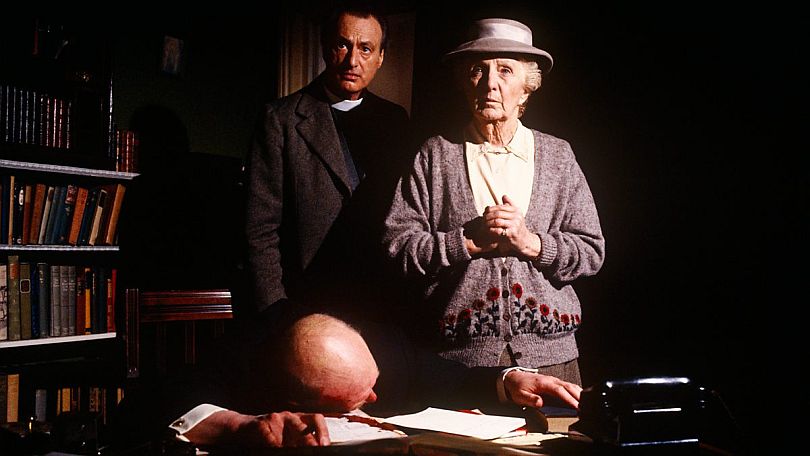
It’s the vicar wot dunnit!’ This was an almost routine explanation for any villainy in some rather unimaginative dramas shown during the 1960s and 1970s, writes Rev Sydney Maitland. The church was an easy target because it did not hit back and the charge of hypocrisy could be levelled so deliciously. The sense of bile and satisfaction was almost palpable.
These days the charge is less effective as much of the church is undistinguishable from the values and more enlightened attitudes of society as a whole. Of course, a rather straight-laced, and strict churchmanship is still a ready target, especially when represented by a rather self-satisfied leadership.
The trouble today is that almost all of our social and indeed political institutions are also in trouble. There is a morass of uncertainty over what moral values should prevail and be observed. There are always explanations of why exceptions should be made. Today’s debate on the right to die is a good example.
So here we are, seeking to follow Jesus Christ in a morally confused community, infested with oh-so-sensitive and inclusive interests that would at any time undermine whatever faith and lifestyle we may seek to follow.
But then there are some things going for us. We are living by faith rather than feelings, impressions or whatever is fashionable. We are also living in a community where our faith defines who and what we are: sinners who are willing to name our faults in the sight of God, and to turn away from them, even if the matter is deep-seated and we are engaged in a lifetime struggle to bring them under control. We are also in a community where we look to support one another in our trials.
And this community is both that of the living and that of those who have gone before us but have left behind their thoughts and the record of their struggles with the issues of life. This is a community that goes back not only the 2000 years to the times of Jesus but also another 1800 years or so to the times of Abraham. And these also are supporting us in the sight of God.
For us the task is to ensure that our lives are well-founded on the life and message of Jesus Christ. He had spoken of lives being like houses: well-founded if build on rock but vulnerable if built on sand.
In times, not only of moral and spiritual confusion, but of uncertainty in almost all aspects of life, it becomes more important than ever to ensure that our faith does not waver. It does not depend on what we see or feel, but on what in the deepest parts of our lives, we know to be true. That knowledge is centred on God and it lives in our spirits – that part of our personality where our relationship with God abides, and is informed and supported by Jesus Himself.
In this we are not unlike mariners, navigating by the stars when out of sight of land, or finding their way using landmarks and buoys when inshore. It is not for nothing that Jesus’ first disciples were fishermen.
Every blessing, Sydney Maitland
